Parasakthi: When History, Politics, and Emotion Collide
Parasakthi, directed by Sudha Kongara, is an ambitious political drama that turns a defining chapter of Tamil Nadu’s history into a charged cinematic experience. Set against the backdrop of the anti-Hindi imposition agitations of the late 1950s and ’60s, the film travels across the state, tracing years of resistance largely led by students. It is not an easy task to compress such a vast, emotionally loaded movement into a single film, but Parasakthi largely succeeds in balancing education with entertainment.
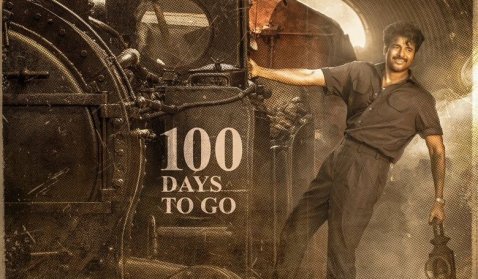
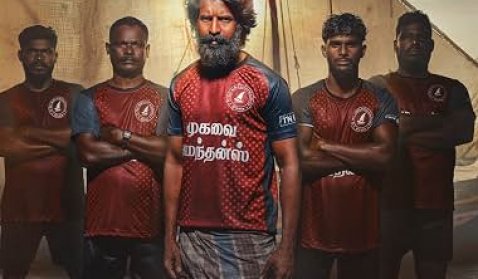
At the heart of the narrative is Chezhiyan (Sivakarthikeyan), the leader of the Puranaanooru squad, which becomes a driving force in the resistance. Sivakarthikeyan delivers a confident and restrained performance, projecting strength and masculinity without slipping into excess. This is not a typical hero-centric film, though. Atharvaa, as Chezhiyan’s younger brother Chinnadurai, provides formidable support. His strong screen presence and fiery spirit often steal scenes, making the brotherly bond one of the film’s emotional anchors.
Sudha Kongara approaches the subject with conviction. The intensity of the protests and the ideological reasons behind them are clearly articulated, even for viewers unfamiliar with this historical phase. While the film occasionally goes overboard in its dramatization, it consistently manages to pull itself back on track. That said, a tighter runtime would have helped sharpen the narrative, as the film does feel stretched in parts.
Parasakthi is anything but subtle. It is loud, stylised, emotionally charged, and unapologetically cinematic. Dialogues land like punchlines, a deliberate choice that works well in a film heavy on speeches and ideological confrontations. Ravi Mohan’s antagonist, Thirunaadan, functions more as an embodiment of an idea than a fully fleshed-out individual. Still, the detailing of his background adds texture, and Ravi brings a certain gravitas that makes his presence felt.
Importantly, the film avoids becoming overtly anti-Hindi. Instead, the fight for freedom and identity remains the core driving force. Even so, a few moments feel overly curated, as if designed to elicit applause rather than arise organically from the story.
Technically, the film is strong. G.V. Prakash Kumar’s background score amplifies the highs and delivers goosebumps at key moments. However, the songs feel overstretched, particularly a romantic number placed at the very start of the second half, which briefly disrupts the narrative momentum. Ravi K. Chandran’s cinematography beautifully captures the period with richness and scale, elevating the film visually. Minor distractions come in the form of censor cuts, where muted dialogues are noticeable but not damaging to the overall experience.
The film is crowded with characters, including several real-life figures and pan-Indian cameo appearances that add a “wow” factor. Credit must be given to the makers for attempting to give arcs to almost every character, even if some are more effective than others. Among the standout performances is Kulappulli Leela as Muthamma, the film’s maternal figure, whose warmth adds emotional depth.
Sreeleela, making her Tamil debut as Ratnamala, is more than just a love interest. As the chief minister’s daughter, a National Radio employee, and the All India Anti-Hindi Council’s secretary, her character is layered and proactive. Her relationship with Chezhiyan feels like one between equals, echoing the dynamic seen in Sudha Kongara’s earlier work Soorarai Pottru. While the romance may not be as impactful as in that film, it is still handled with care and sensitivity.
Parasakthi is not flawless. The quieter human moments occasionally pull focus away from the central conflict. Yet, these interactions—between brothers, lovers, and elders—also provide much-needed sensitivity to an otherwise hard-hitting subject.
In the end, Parasakthi stands as a powerful, politically charged, and emotionally resonant film. It boldly wears its politics on its sleeve and makes a sincere, ambitious attempt to bring a crucial chapter of history to the screen.
Do you like it? Let's share it!

NOW SHOWING


COMING SOON